Tree Removal & Tree Service in Dearborn Heights, MI
Tree removal and trimming across Dearborn Heights, MI. Crews familiar with the area's older canopy, clay soils, and Rouge River low spots.
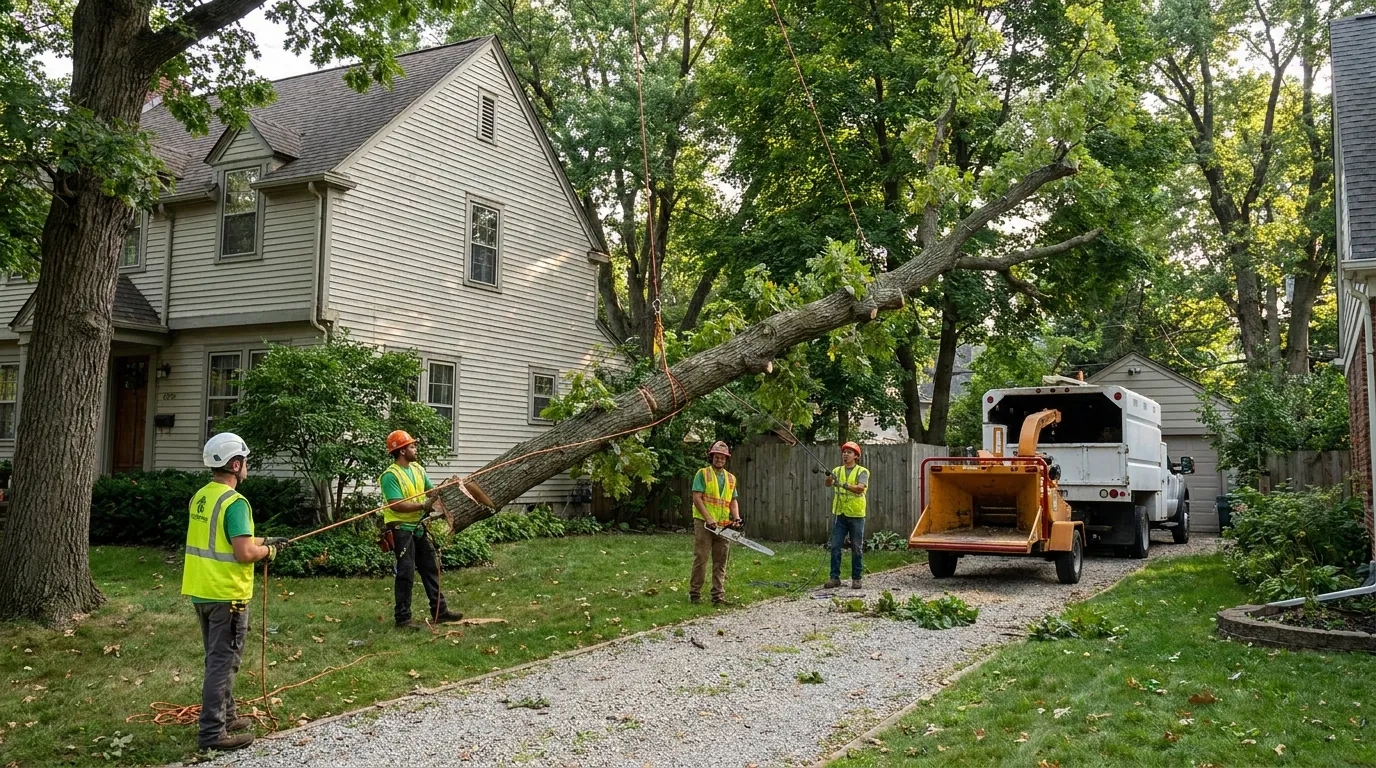
Serving Dearborn Heights homeowners
Dearborn Heights borders Dearborn directly to the west and stretches north and south along the Rouge River corridor. That gives it a wider range of terrain than its neighbors — higher, drier ground on the ridges and low, damp bottomland near the river branches. The housing runs from tidy postwar streets to larger lots with genuinely big shade trees, and the mix means no two removals here look quite the same.
Where lots back onto the Rouge, we see more cottonwoods, willows, and box elders that grow fast, hold a lot of weight, and shed limbs readily in wind. On the drier streets it is more often overgrown maples and declining ash. Whatever species you are dealing with, the first question is always whether the tree needs to come out entirely or can be reduced and kept — our tree removal service page covers how we make that call.
Local conditions that shape the work
The Rouge River low spots in Dearborn Heights stay wet, and that soft ground changes how we bring equipment in. On saturated clay we use matting or hand-carry gear to avoid tearing up a lawn and to keep a machine from sinking. Trees growing in that constantly moist soil also tend to develop shallow, spreading root systems that are more prone to uprooting when a hard storm rolls through off the lake.
Winter here brings the same hard freezes and freeze-thaw swings as the rest of the area, and ice loading is a real concern on wide-crowned trees near the river. A branch that carried summer leaves fine can snap under a coat of ice. If a storm has already left you with a split trunk or a hanging limb, our tree removal repair crews handle that cleanup and make the tree safe.
Get an estimate in Dearborn Heights
Whether you have a leaning riverbank cottonwood or an overgrown maple crowding the house, tell us what you are seeing and we will schedule an assessment.
Serving all of Dearborn Heights and the neighboring communities.
Frequently asked questions
Can you work on wet lots near the Rouge River?
Yes, though soft, saturated ground changes our approach. We use ground matting or hand-carry equipment to protect the lawn and keep machinery from sinking, and we schedule work for drier windows when that is safer.
Are cottonwoods and willows harder to remove?
They carry a lot of weight in soft wood and often lean over property lines or the riverbank, so they take careful rigging. We plan the sequence of cuts to control where each section lands.
Do you clear storm damage after ice or windstorms?
We do. Ice loading and high winds off the lake regularly leave split trunks and hanging limbs in Dearborn Heights, and we prioritize making those trees safe before doing the full cleanup.