Tree Planting & Replacement in Dearborn
Tree planting and replacement in Dearborn. Right species for local clay soils and freezes, proper planting steps, and after-care that lasts.
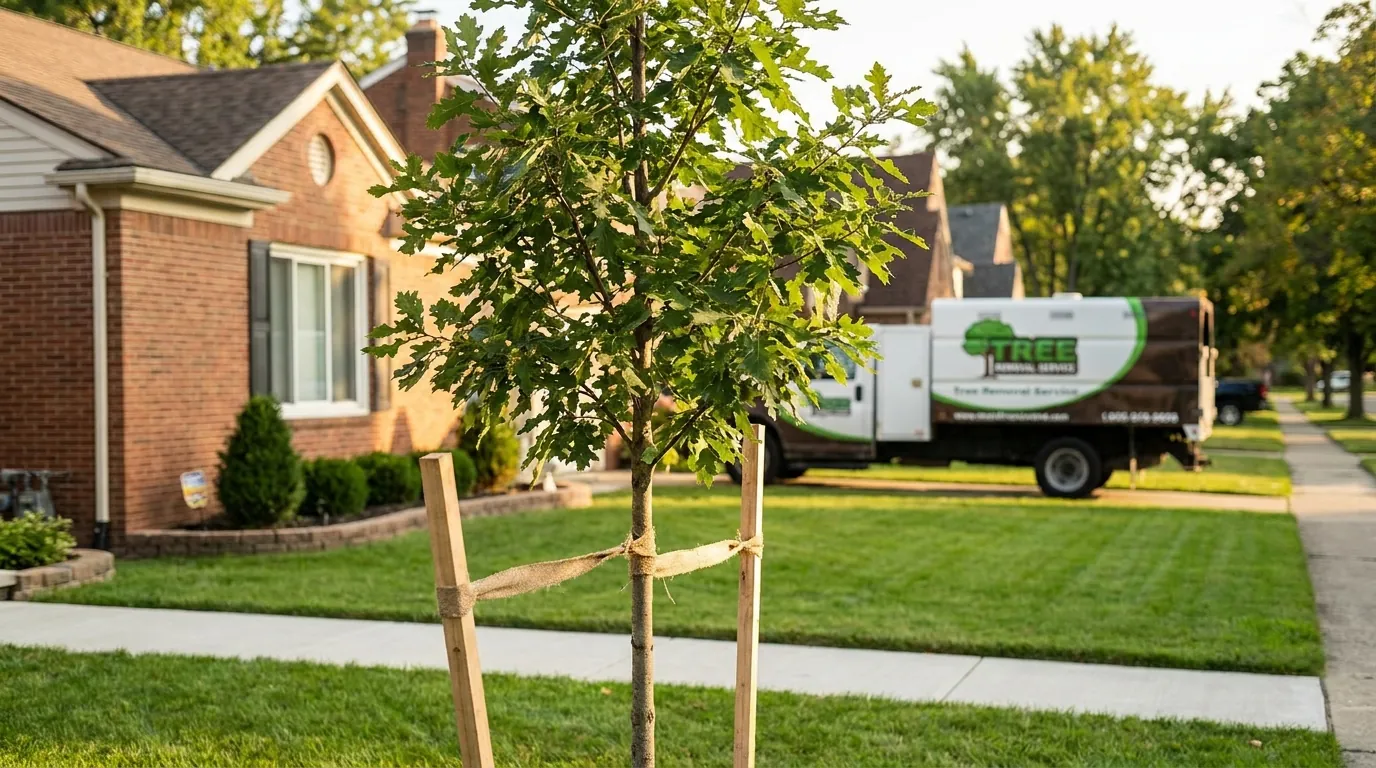
After the removal comes the replacement
When a tree comes out, the spot rarely stays empty for long. Homeowners want shade back, a screen from the neighbors, or simply a healthier tree than the one that was there. Planting a replacement well is what determines whether the new tree thrives for decades or struggles from the first summer. That planning starts before the hole is dug — with the species, the location, and the soil it is going into.
The wrong choice is common. A fast-growing silver maple or box elder planted too close to the house repeats the exact problem that led to the removal — roots in the sewer line, limbs on the roof, weak wood that fails in storms. The right choice matches a tree's mature size and root habit to the space and to Dearborn's growing conditions. If you are here after a takedown, our tree removal service page covers the removal side, and this page covers what goes back.
Good candidates for the Dearborn area include hardy shade and ornamental species that tolerate heavy clay and cold winters — the point is to plant something suited to the site rather than whatever is on sale. We help you weigh mature height, root spread, salt and moisture tolerance, and how close the spot is to the house, driveway, and utility lines.
How a tree gets planted right
A tree's whole future is set in the first day. These are the steps that make the difference.
-
Species and site match
We pick a tree whose mature size and roots fit the spot, and that handles Dearborn's clay soils, salt, and hard freezes. Wrong-place trees are the number-one cause of future removals.
-
Digging the right hole
The hole is dug wide and only as deep as the root ball — planting too deep in heavy clay drowns roots. In clay we roughen the sides so roots don't circle in a slick-walled pit.
-
Setting and backfilling
The tree is set with the root flare at or just above grade, straightened, and backfilled with the native soil rather than a rich mix that would trap water in the clay bowl around it.
-
Mulch and water
A wide, shallow mulch ring — kept off the trunk — conserves moisture and moderates soil temperature. A deep initial watering settles the soil around the roots.
-
Staking and after-care
Young trees are staked only if the site is windy, and loosely so the trunk can flex. We leave you clear guidance on watering through the first two summers, which is when new trees are won or lost.
Why Dearborn soil and weather drive the choices
Dearborn's glacial soils swing between sandy and heavy clay, and clay is the harder master. It drains slowly, so a hole dug too deep becomes a bucket that holds water against the roots — a frequent reason new trees fail here. Planting slightly high and backfilling with native soil rather than a fluffy amended mix keeps water moving instead of pooling.
Hard freezes shape the timing. Spring and fall are the planting windows; a tree set in fall roots into cool, moist soil before winter and comes out ahead the following summer. Trees planted in midsummer heat need much more watering to survive. Lake-effect moisture helps establishment, but it also means the same fast, dense growth that makes local trees need regular trimming and pruning once they mature.
Road and sidewalk salt is a real factor on lots near busy streets in Dearborn and neighboring towns — some species shrug it off and others decline slowly from it. Matching the species to how exposed the spot is to salt spray and runoff is part of getting a replacement that actually lasts.
Plan your replacement tree
Tell us the spot, how close it is to the house and drive, and what you want from the tree — shade, screening, or looks. We'll help match a species to the site and to Dearborn's conditions.
Spring and fall are the best planting windows in southeast Michigan.
Frequently asked questions
When is the best time to plant a tree in Dearborn?
Spring and fall are the strongest windows. Fall planting lets roots establish in cool, moist soil before winter, so the tree is ready for the next summer. Midsummer planting is possible but demands much more careful watering to survive the heat.
What trees do well in this area's clay soil?
Species that tolerate heavy, slow-draining clay and cold winters do best, and the right pick also depends on how much room the spot has and how close it is to salt from roads. We help match the tree to the site rather than defaulting to a fast grower that becomes a problem later.
Why did my last tree fail?
The most common causes locally are planting too deep in clay so the roots stay wet, skipping water through the first summers, and choosing a species too large for the space. Getting the hole depth and the first two years of watering right prevents most of it.
Can you plant where the old tree was removed?
Often yes, once the stump is ground out and the ground is worked. Sometimes the best spot shifts a few feet to give the new tree room away from the house and old root mass, which we'll advise on during the site visit.