Tree Removal & Tree Service in Detroit, MI
Tree removal and trimming for Detroit, MI neighborhoods near Dearborn. Crews experienced with mature city trees, tight alleys, and old canopy.
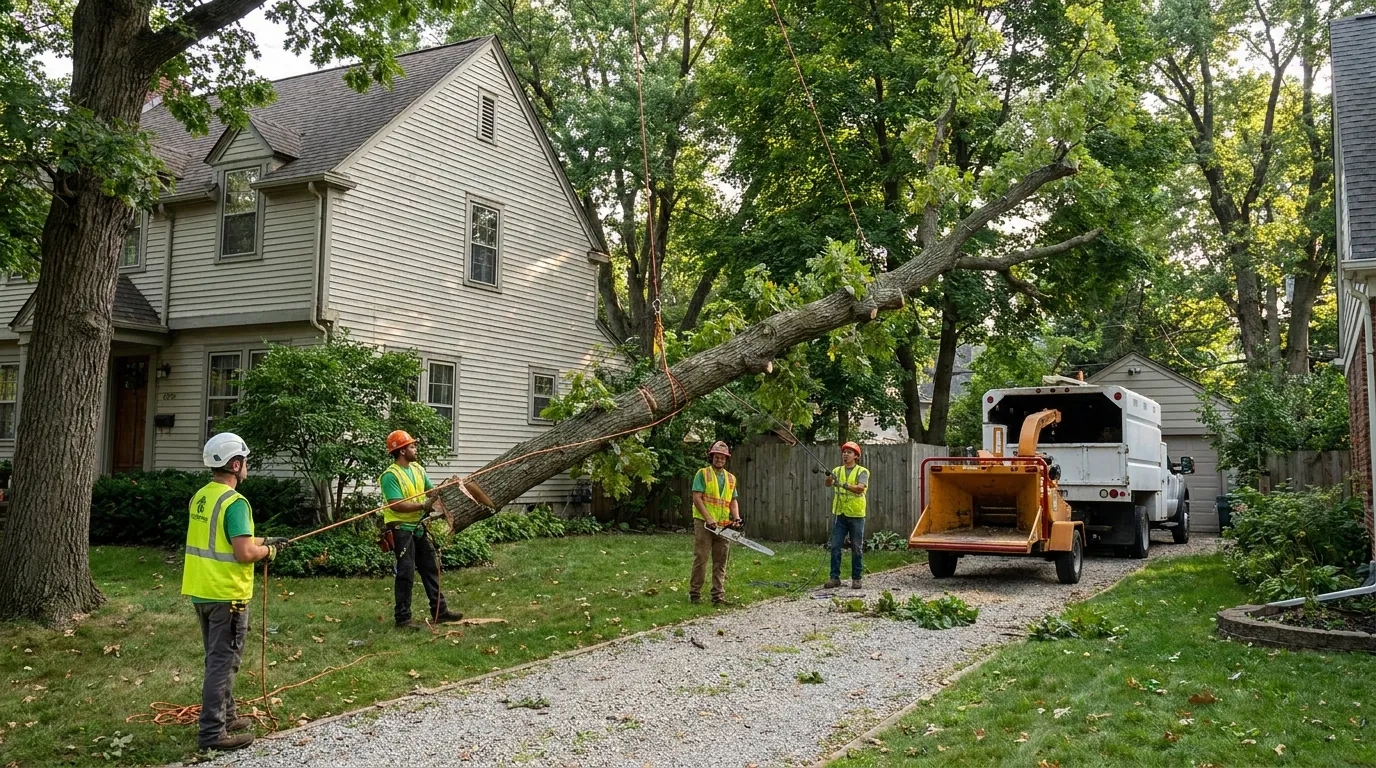
Serving Detroit homeowners
Detroit borders Dearborn to the east, and the west-side neighborhoods closest to us carry some of the oldest and largest residential trees in the region. Streets laid out a century ago were lined with elms, oaks, and maples, and the survivors are now enormous — often taller than the houses and set on narrow lots with alleys running behind. That combination of huge canopy and tight urban space is the defining challenge of removal work in Detroit.
On these lots there is almost never room to fell a tree, so the work is done piece by piece, rigging sections down over the roof and lowering them to a controlled drop zone. Access matters too: a rear-yard tree may have to come out over a garage or through a narrow gangway. We plan each Detroit job around what the site actually allows, and our tree removal service page explains how that assessment works.
Local conditions that shape the work
Detroit's soils run the same sandy-to-clay glacial mix as the rest of the area, but decades of urban fill and compacted ground near old foundations complicate root health. Big old trees growing in compacted, poorly drained soil develop stress cracks and internal decay that are not always visible from the street, which is why an old-looking city tree deserves a close look before anyone assumes it is sound.
The climate pressures are familiar: hard freezes, freeze-thaw cycles, and lake-effect moisture that all work on aging wood. A century-old maple with hidden decay can drop a major limb without warning under summer leaf weight or a winter ice load. If you already have a cracked trunk, a hanging limb, or a tree that has partly failed, our tree removal repair service focuses on making it safe.
Get an estimate in Detroit
Tell us where the tree stands, how tight the access is, and what you have noticed — dead limbs, cracks, or leaning. We will schedule an on-site look.
Serving Detroit neighborhoods bordering Dearborn.
Frequently asked questions
Can you remove a large tree on a narrow Detroit lot?
Yes. On tight urban lots we take trees down in sections, rigging and lowering pieces over the roof to a controlled drop zone rather than felling. We assess access — gangways, alleys, and garages — before we quote the work.
How can I tell if an old city tree is unsafe?
Warning signs include large dead limbs, bark falling away, mushrooms at the base, and vertical cracks in the trunk. Many old Detroit trees carry hidden internal decay, so if you see any of these it is worth having the tree looked at.
Do you clear fallen or hanging limbs after a storm?
We do. Hard freezes, ice, and high winds regularly bring down limbs on Detroit's mature trees, and we prioritize removing hazards that threaten the house or walkway before finishing the full cleanup.