Tree Removal & Tree Service in Southgate, MI
Tree removal, trimming, and stump grinding for Southgate, MI. Local crews familiar with Downriver clay soils and mature subdivision trees.
Serving Southgate homeowners
Southgate sits south of Dearborn in the heart of the Downriver communities, a compact suburb of postwar and mid-century homes on well-defined residential streets. Like its neighbors, Southgate was landscaped decades ago with maples and ash that have long since outgrown their planting spots and now shade whole rooflines. The typical call here is a big, mature tree that has become more liability than asset — dropping limbs, lifting sidewalks, or leaning toward the house.
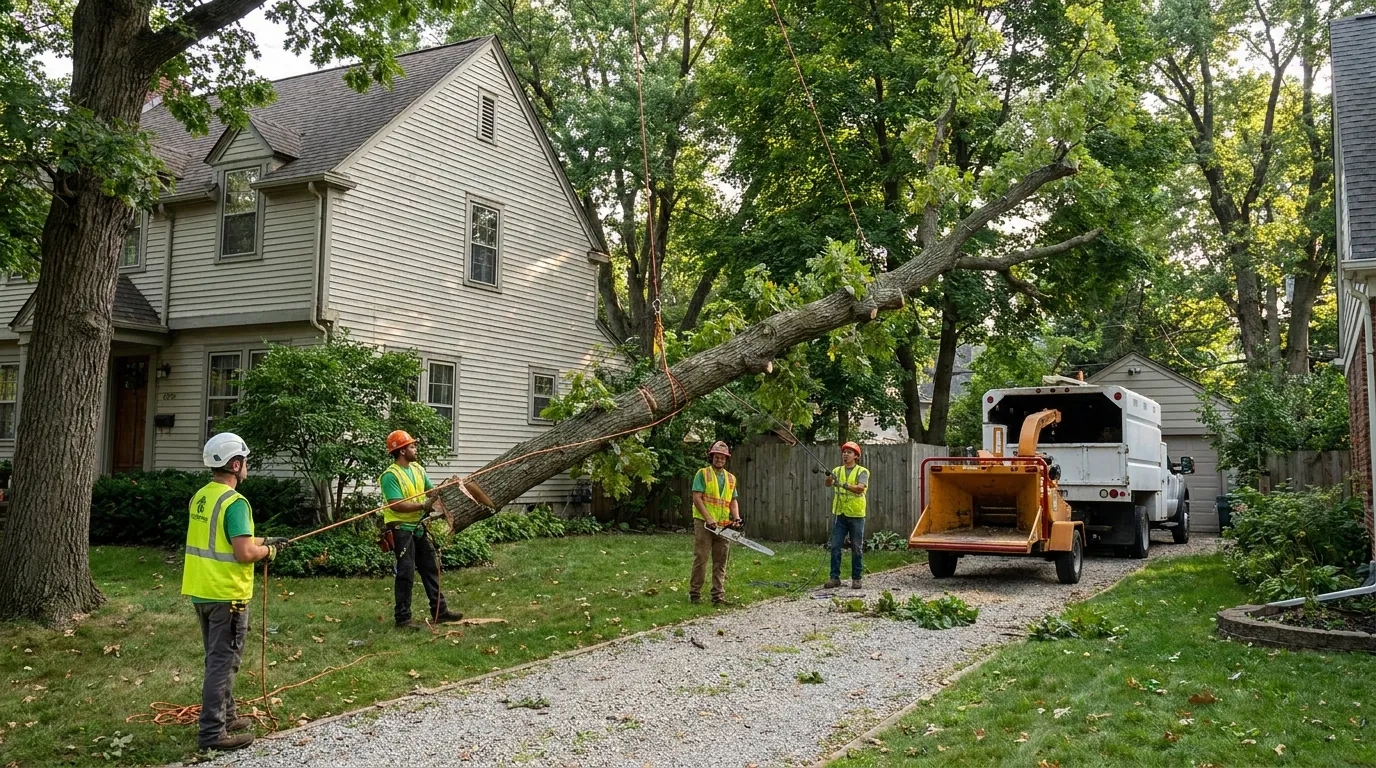
Southgate's lots are modest, so removals usually need careful lowering rather than open felling, especially where a tree stands between two houses or over a shared fence line. We plan the drop zone and protect the surrounding property before any large cut. If your question is whether a tree can be saved with a good pruning instead, our tree removal service page explains how we weigh that.
Local conditions that shape the work
Southgate's ground is the same slow-draining Downriver clay, and the flat terrain means water lingers after the lake-effect rains that come off Lake Erie. Persistently wet root zones weaken the anchoring on tall silver maples and softwoods, and that is the main reason we see leaning and uprooted trees here after big storms. A tree in saturated clay simply does not hold as well.
The freeze-thaw cycles of a Michigan winter add stress on top of that — soil heaves, roots loosen, and ice loads test weak unions in the canopy. Because the roots on these wet-soil trees spread wide and shallow, stump grinding is important after a removal to keep the leftover roots from sprouting or heaving the lawn. For trees already broken by wind or ice, our tree removal repair crews handle the cleanup and reduce the hazard.
Get an estimate in Southgate
Let us know the tree's size, its distance from the house or fence, and anything you have noticed like leaning or dead limbs. We will set up a visit.
Serving Southgate and the surrounding Downriver communities.
Frequently asked questions
Do Southgate's small lots make removal harder?
They can. On modest lots we usually lower trees in controlled sections rather than felling, and we plan the drop zone to protect the house, the fence, and the neighbor's yard before any large cut.
Why do trees uproot here after storms?
Southgate's flat clay ground drains slowly and stays wet, which weakens the anchoring on tall silver maples and softwoods. Saturated soil lets the root plate lift under high wind, so uprooting is a common result of big storms.
Is stump grinding necessary?
It is often worth doing here. Wet-soil trees leave wide, shallow roots that can sprout and heave the lawn, and grinding removes the visible stump so you can regrade, replant, or reclaim the space.