Tree Removal & Tree Service in Taylor, MI
Tree removal, trimming, and stump grinding for Taylor, MI. Local crews who know the area's flat clay ground and fast-growing subdivision trees.
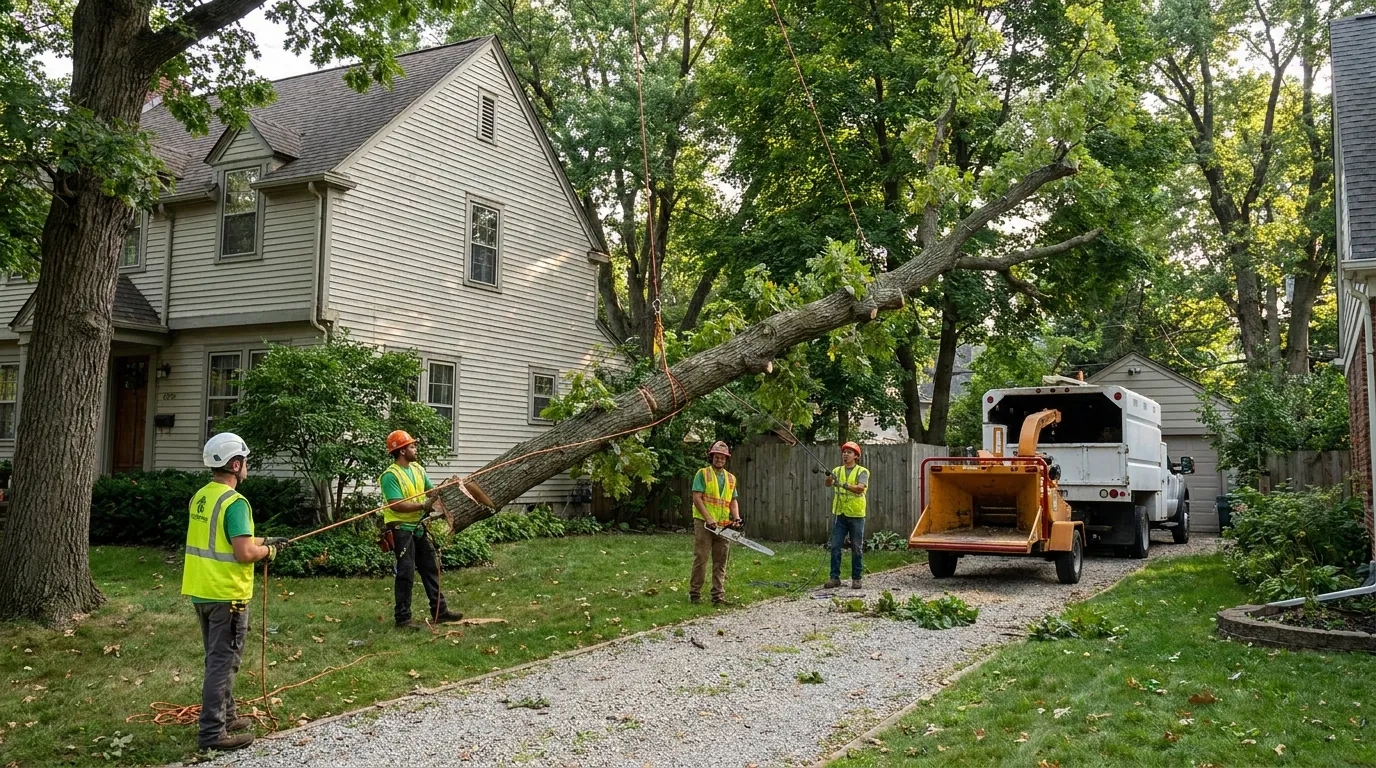
Serving Taylor homeowners
Taylor lies southwest of Dearborn, out where the Downriver landscape flattens into broad, low-lying subdivisions. A lot of Taylor's neighborhoods were built out from the 1950s through the 1970s, and the trees planted then — silver maples, ash, and fast-growing softwoods — have matured into big canopies that now crowd rooflines, gutters, and power lines. That is the most common reason we get called here: a tree that was the right size for a new subdivision is now too big for its spot.
Taylor lots tend to be a bit more generous than the older streets closer to Dearborn, which sometimes gives us room to work from the ground. But flat terrain also means water sits, and that has a direct effect on tree health and removal planning. If you are not sure whether a tree needs to come out or just needs a hard trim, our tree removal service page explains how we evaluate it.
Local conditions that shape the work
The flat, clay-heavy ground across Taylor drains slowly, and standing water after lake-effect rains keeps root zones soggy for long stretches. Softwoods and silver maples growing in that wet ground put down shallow roots and become top-heavy, which is why Taylor sees so many wind-related failures and leaning trees after storms. Saturated clay under a big tree is exactly the condition that lets a root plate lift.
Winter freeze-thaw cycles add to it — water that soaked into the ground in fall freezes, expands, and works the roots loose. When we remove a leaning tree here, grinding the stump matters more than usual because the shallow, spreading roots left behind can sprout and heave a lawn. For trees already damaged by wind or ice, our tree removal repair service handles the cleanup and hazard reduction.
Get an estimate in Taylor
Describe the tree, how close it stands to the house or wires, and whether you have seen leaning or heaving. We will set up a visit and give you a straightforward plan.
Serving Taylor and the surrounding Downriver area.
Frequently asked questions
Why do so many Taylor trees lean after storms?
Taylor's flat, clay-heavy ground drains slowly and stays wet, which encourages shallow roots on the silver maples and softwoods common here. Saturated soil lets those root plates lift in high wind, so leaning is a frequent problem after storms.
Should I grind the stump after removal?
In Taylor it is usually worth it. The shallow, spreading roots left behind by wet-soil trees can send up sprouts and heave a lawn, and grinding the stump removes the visible portion so you can regrade or replant.
Do you handle trees close to power lines?
We assess proximity to service drops and plan the work to keep clear of energized lines. For anything touching the utility's own lines, that portion is the power company's responsibility, and we will tell you when that is the case.