Emergency Tree Service in Dearborn, MI
Emergency tree service in Dearborn, MI for storm-damaged, fallen, and hung-up trees. What to do first, how we respond, and how local storms cause failures.
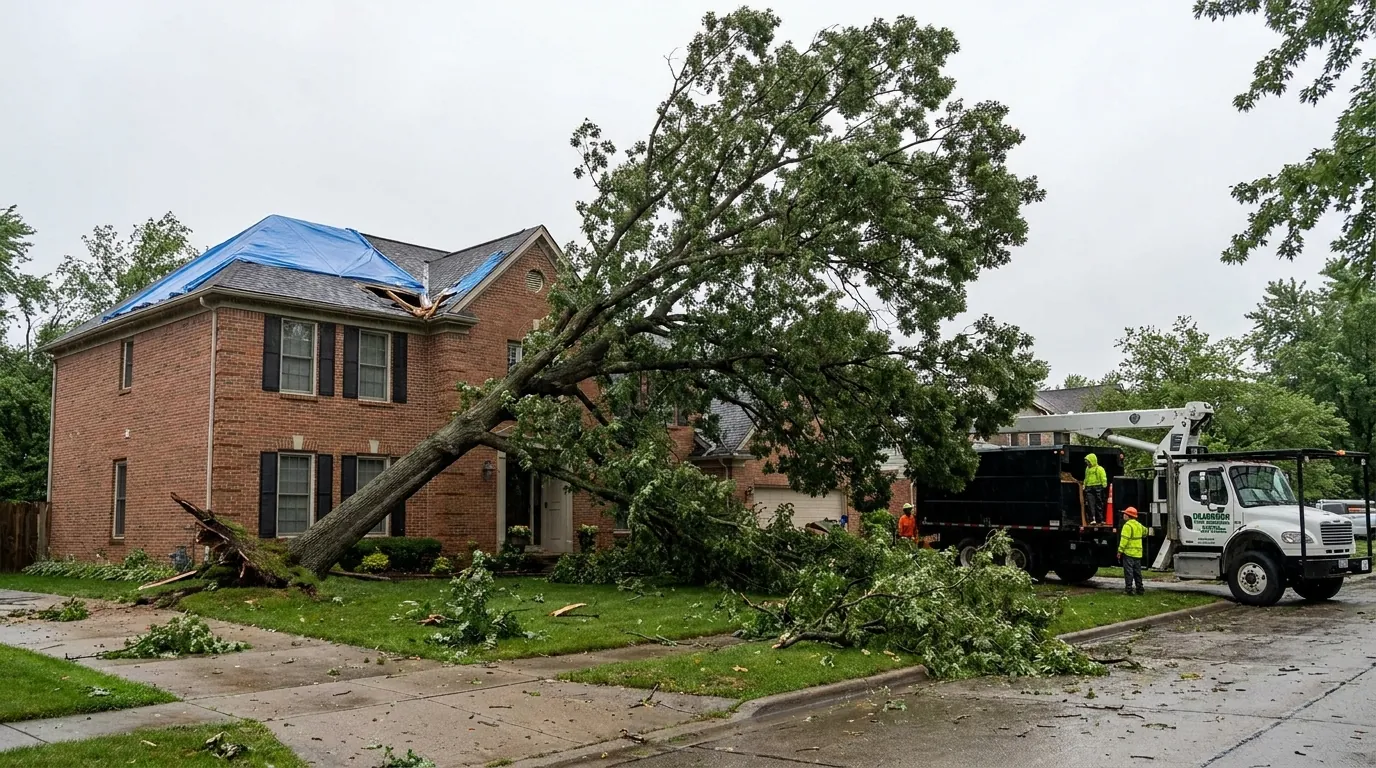
When a tree can't wait
Some tree situations are a scheduling matter and some are an emergency. A tree on the roof, a trunk split and hanging over the yard, a limb tangled in the service drop, or a tree down across the driveway all need a prompt, careful response — not a saw grabbed in a panic. If you're searching for a tree service near me in the middle of a storm cleanup, the first job is making the area safe, and the second is removing the hazard without causing more damage.
The most dangerous situations we see in Dearborn after storms are hung-up limbs loaded with tension, partially uprooted trees that look settled but aren't, and brittle dead ash that shatters when touched. These are exactly the cases where a wrong cut sends a limb swinging or drops a load the wrong way. If no one is in immediate danger, keep people and cars clear and let a crew assess the tension before anything is cut.
How we handle an emergency call
Storm work is about controlling hazards in the right order.
-
Make it safe first
We identify what's holding weight, where the tension is, and whether utility lines are involved. If a power line is down or involved, that's a call to the utility and DTE first — we don't touch energized lines.
-
Stabilize or relieve the load
Hung-up and leaning sections are rigged and relieved in a controlled order so nothing swings or drops unexpectedly onto the house, fence, or vehicles.
-
Remove the hazard
Once the load is controlled, the damaged tree or section is dismantled and lowered. This often overlaps with full [tree removal](/services/tree-removal/) when the tree can't be saved.
-
Clear and secure
We clear what's blocking access and driveways first, then handle cleanup. Larger brush and stump work can be scheduled as a follow-up once the emergency is resolved.
Why Dearborn storms cause the failures they do
Our failures follow the weather. Summer thunderstorms rolling in with lake-effect moisture bring the straight-line gusts that snap weak unions and overloaded limbs, while saturated clay soil after a long wet spell loosens root plates so whole trees tip. Winter adds ice and heavy wet snow that overloads branches, and the freeze-thaw cycle widens cracks that were already there. A tree that was marginal in calm weather is the one on the ground after a Dearborn storm.
The best defense is dealing with weak trees before the storm, not after. Routine tree trimming to remove deadwood and a tree health assessment on your biggest trees cut down on the emergency calls — but when something does come down, we're set up to respond quickly across Dearborn and the surrounding communities.
Tree down or hanging? Call us.
If a tree or limb is threatening your home, keep clear of it and call. We'll triage the hazard and respond to storm damage across Dearborn and nearby towns.
If anyone is in danger or a power line is down, call 911 and DTE first.
Frequently asked questions
What should I do first when a tree falls on my house?
Get everyone out of the affected area and stay clear of the tree and any downed wires. If a power line is involved, call 911 and DTE before anyone goes near it, then call us to handle the tree once the area is safe.
Do you remove trees that are tangled in power lines?
Energized utility lines are the responsibility of the power company, and we don't touch them. Once the utility has made the line safe, we can remove the tree or limb.
Will my insurance cover emergency tree removal?
Coverage varies by policy, but many homeowner policies address tree damage to structures. We can provide the documentation you need, and you should contact your insurer early in the process.
How fast can you respond after a storm?
Response depends on how many calls a storm generates and the severity of each hazard. We prioritize situations where people or occupied structures are at risk and work through the rest as quickly as we safely can.