Stump Grinding in Dearborn, MI
Stump grinding in Dearborn, MI: remove old and new stumps below grade so you can reclaim your yard, replant, or stop regrowth and pests.
Why that leftover stump is worth removing
A stump is more than an eyesore. It's a trip hazard, a mower-killer, a magnet for carpenter ants and termites, and on many species a source of persistent sucker growth that keeps sending up shoots for years. In Dearborn's older, tighter lots, a single stump can also block the one spot you wanted for a patio, a fence post, or a new tree. Grinding solves all of that by reducing the stump — and the flare of surface roots — into chips below the soil line.
Grinding is also the natural finish to a removal. After tree removal you're left with a cut stump; grinding it out is what actually clears the ground. We handle both fresh stumps and the weathered ones that have been sitting for years, including the dead ash stumps so common around here.
How stump grinding works
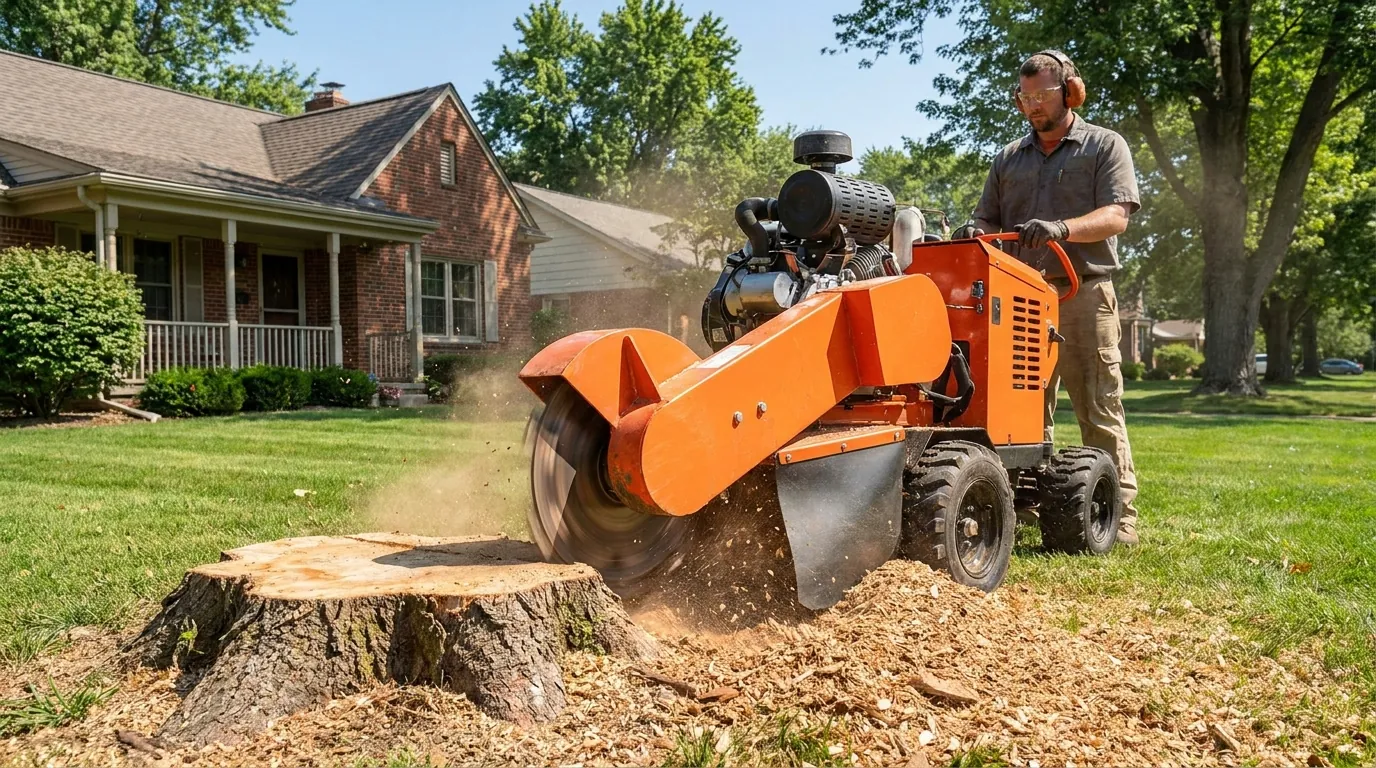
A stump grinder uses a spinning wheel of carbide teeth to chew the wood away in passes.
-
Locate utilities
Before any grinding, underground utilities need to be marked. We confirm there are no gas, water, or electric lines running through the stump zone — common near the house in Dearborn's compact lots.
-
Clear and set up
We expose the stump base, remove rocks and debris that would dull or deflect the teeth, and position the grinder with a clear swing path.
-
Grind below grade
The wheel grinds the stump and major surface roots to several inches below the surrounding soil — deeper if you plan to replant in the same spot.
-
Backfill and finish
The grindings make a mound of chips and soil you can use to backfill the hole, haul away, or spread. The mix settles over a few weeks, so a slight overfill is normal.
Local soil and what to expect afterward
Dearborn's glacial soils mean stumps come with surprises underground — grinding through sandy pockets is quick, while heavy clay packed around the roots is slower and buried fieldstone can force the grinder to work around it. Older trees that sat in moist clay often have wide, shallow root flares that spread out well beyond the trunk, so a full grind-out covers more area than people expect.
After grinding, the wood chips left behind will break down over time and temporarily tie up nitrogen in the soil, so if you're replanting right away it helps to remove the chips and bring in topsoil. If you still have standing trees you're deciding about, pairing stump work with a tree health assessment is an efficient single visit.
Reclaim the space a stump is holding
Tell us how many stumps, roughly how big, and whether you plan to replant, and we'll quote the grind. We serve Dearborn and nearby towns.
Call during business hours to schedule stump grinding.
Frequently asked questions
How deep do you grind a stump?
Typically several inches below grade, which is enough for lawn and most landscaping. If you plan to replant a tree in the same spot, we grind deeper and clear more of the root mass.
Does grinding remove the whole root system?
Grinding removes the stump and the major surface roots, not every lateral root deep in the soil. Those remaining roots are dead and decay naturally over time without sending up new growth.
What happens to the wood chips?
They're left as a mound you can use to backfill the hole, or we can haul them away. Because fresh chips tie up nitrogen as they break down, remove them before replanting in that spot.
Can you grind a stump in a tight backyard?
Usually yes. Grinders come in sizes that fit through standard gates, which matters on Dearborn's narrower lots. We confirm access before scheduling.